



Rob Cortez did a great job. walked through everything and was able to answer any questions I had.

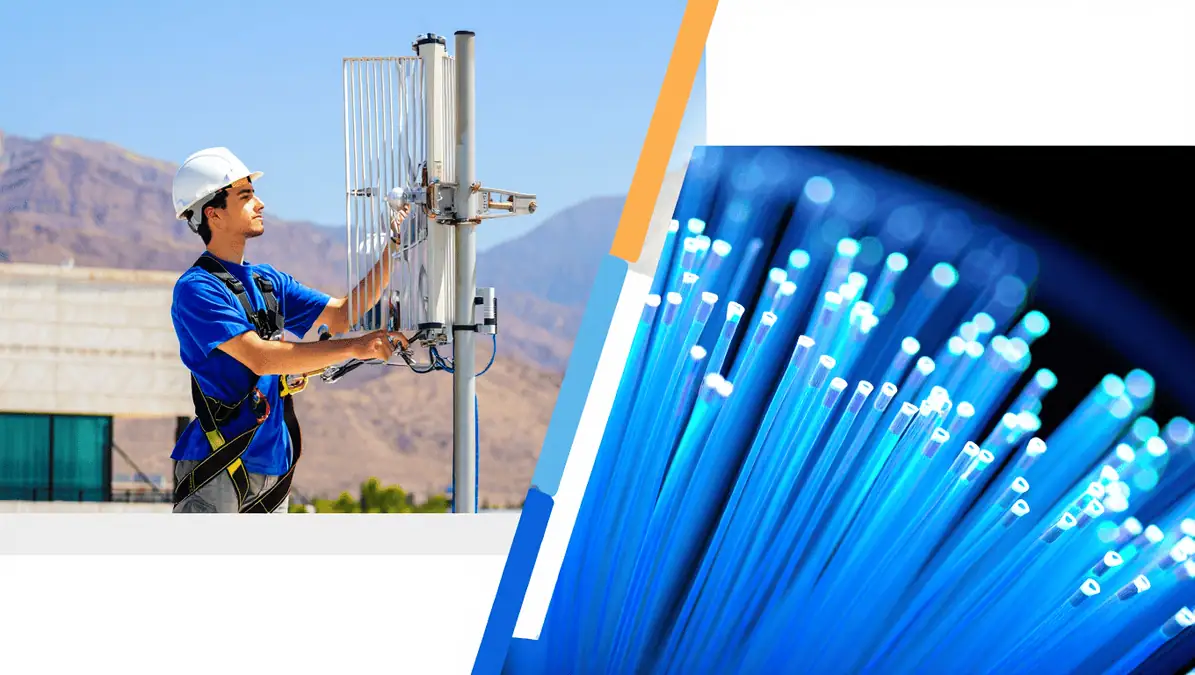
When evaluating high-speed internet options, two technologies often stand out: fixed wireless internet and fiber internet. Both are capable of delivering fast, reliable connectivity, but they differ significantly in how they are deployed, how they perform in real-world conditions, and where they are available. Understanding the differences between fixed wireless vs. fiber helps users make an informed decision based on location, timeline, and performance needs.
This comparison breaks down how fixed wireless and fiber internet work, highlights their strengths and limitations, and explains which option may be the better fit for different use cases.
Fiber internet uses fiber-optic cables to transmit data as light signals. This technology enables extremely fast speeds, very low latency, and exceptional reliability. Fiber is often considered the gold standard for internet connectivity where it is available.
Because fiber relies on physical cabling, installation typically requires trenching, access to existing infrastructure, or construction approval. These requirements can limit availability and extend deployment timelines.
Fiber internet offers several key benefits:
Despite its performance, fiber has some drawbacks:
Fixed wireless internet delivers connectivity using radio signals transmitted from a network tower to a fixed antenna installed at a customer’s location. Unlike mobile wireless services, fixed wireless provides a dedicated connection to a specific address.
Because it does not require underground cabling, fixed wireless can be deployed quickly and is often available in areas where fiber infrastructure is not present.
Fixed wireless offers several advantages compared to fiber:
While fixed wireless is highly reliable, there are a few considerations:
Fiber internet is capable of delivering the fastest speeds available today, often reaching multi-gigabit levels. For organizations with extremely high bandwidth requirements, fiber provides unmatched throughput.
Fixed wireless delivers high-speed connectivity that meets the needs of most homes and businesses. While maximum speeds may be lower than fiber in some cases, fixed wireless focuses on consistent, usable performance rather than theoretical peak speeds.
For many users, fixed wireless speeds are more than sufficient for streaming, cloud applications, video conferencing, and everyday business operations.
Fiber is known for its stability because data travels through protected underground cables. However, fiber outages can still occur due to construction damage or infrastructure issues.
Fixed wireless networks are designed with redundancy and proactive monitoring. Providers often build multiple network pathways to maintain uptime and quickly restore service if disruptions occur.
In some scenarios, fixed wireless can even recover faster than fiber after an outage.
Fiber installation timelines can vary widely. In areas without existing infrastructure, deployment may take weeks or even months due to permitting and construction requirements.
Fixed wireless internet can often be installed within days. Without trenching or cabling, providers can activate service quickly with minimal disruption to the property.
Fiber internet availability is limited to areas where infrastructure has already been built. Many neighborhoods, office parks, and rural locations do not have access to fiber service.
Fixed wireless is available in a much wider range of locations. Providers can expand coverage by deploying new towers, making fixed wireless a practical solution where fiber is not feasible.
Fiber internet often comes with higher installation and monthly costs, particularly for businesses requiring dedicated circuits or custom builds.
Fixed wireless typically offers more cost-effective pricing, especially when factoring in faster deployment and lower infrastructure expenses. Many providers also offer transparent pricing models without surprise increases.
Businesses with extremely high data demands or specialized workloads may benefit most from fiber internet. However, many organizations find that fixed wireless provides the right balance of performance, reliability, and deployment speed.
Fixed wireless internet service is especially valuable for businesses that need rapid installation, scalable service, or a reliable backup connection to complement fiber.
For residential users, fiber offers exceptional performance where available. However, fixed wireless provides a strong alternative for homes without fiber access or for those seeking faster installation and consistent speeds.
Both options can support streaming, gaming, remote work, and smart home devices when properly provisioned.
The best choice depends on availability, timeline, budget, and performance requirements. Fiber excels in maximum speed and long-term scalability, while fixed wireless stands out for flexibility, accessibility, and rapid deployment.
Evaluating real-world performance rather than advertised speeds helps ensure the selected solution meets practical needs.
Both fixed wireless and fiber internet offer high-quality connectivity solutions. Fiber delivers unmatched speed where available, while fixed wireless provides fast, reliable service without the constraints of physical infrastructure.
For users seeking dependable performance, faster activation, and broader availability, fixed wireless is often the more practical choice. Understanding these differences empowers consumers and businesses to select an internet solution that supports both current needs and future growth.
Rob Cortez did a great job. walked through everything and was able to answer any questions I had.
Great service and attention to detail. They came in and went through every step with us as a business. Assisted and did everything in their power to help with any concerns and assisted us in moving carriers as well as doing a follow up from start to finish. Everything was done very quickly and with care. The staff were friendly especially our salesperson! Mathew helped the most and was very attentive throughout the whole process and is a great experience in general
Great customer service, the service it self has been great as well. Highly appreciated and recommended. Make sure you ask for Mark when you call, he'll get you all set up.
Carl did an outstanding job installing our new satellite and getting our internet set up. He arrived on time, explained everything clearly, and made sure the entire system was working perfectly before he left. His professionalism, patience, and attention to detail really stood out. We're very grateful for the smooth experience--thank you, Carl!
I've had ISP.net for 10 years. I'm a residential customer and when I say I've never had an outage or slow uploads/downloads speeds belive me. I kinda chuckle at all the comments out their who have the bigger know names for service when they complain about service, price and reliability I wish I could tell them get ISP.net. pricing is very competitive for the what's out there. If I do need to call about change of email or phone number I speak to someone right away and I love that its a local business. Give them a call and try it out.
Service was done in a timely and professional manner. He explained the job intentions and made sure wifi was up and working.
Carl and Joe Excellent customer service, highly skilled, very knowledgeable service guys. Carl set expectations explained the procedures midway provided an update and at the end of the install provided a summary of what to expect.If there ever was a concern. Joe joe explained the equipment lights.How to get in touch with tech support?How to do a hard reboot?How long does it take to reboot. Absolutely excellent customer service.These guys are the best.Thank you for all you did at this house
Rob came out set us up our business internet, clean, fast professional job, highly recommended. Internet quality and speed is excellent.
We had our services changed to isp and I'll tell you what from set up to being serviced was top tier. Our service tech Carl Kimbrough was amazing. He was knowledgeable and so patient. We are dog lover family and was accommodating to our family and furbabies. Thank you ISP!
Once again Isp.net to the rescue. They sent technician PAUL JAMES to my home, and what a knowledgeable, patient, hard worker he was and is. I'm a return customer and very familiar with the quality of their service. The biggest mistake I made was leaving in the first place. It's refreshing to deal with a company that genuinely cares about their customers unlike some others that we won't speak of. MARK in sales started the ball rolling for me and everything went flawless from start to finish. If you want quality, affordability, and a company that stands behind their brand Isp.net is it. I'm in it for the long haul now. I found out the hard way everything that glitters isn't gold. My experience again with Isp.net was AMAZING, and pleasurable. I felt like my opinion mattered, and I felt listened to. Thank you to everyone at Isp.net for all you do. And you be sure if anyone asks me about an internet service provider you can bet I'll be sending them your way.
Carl was fantastic! Very friendly and knowledgeable. I'm thrilled I have great service everywhere in my home now!
Carl came out to instal my mom Amy's internet and he was a great guy with a good outlook on life. 5 star service
we got friendly and quick help from Carl! My dad, Max, wanted new wifi in the house and Carl was able to set us up with the cables, satellite, and new box quickly and efficiently. We'd recommend Carl for any future services!
Carl was absolutely the best technician ever. He took care of all of my needs and stayed to make sure that my portal was set up and that everything was exactly the way it should be. I highly recommend him and he's a great employee all the accolades.
Carl was our service professional and did an outstanding job. He communicated clearly throughout the entire process and had us back up and running efficiently. I couldn't be happier with the level of service--five stars!
Paul & Carl they showed up promptly awesome very nice showed me how to work everything I give them a 100
Carl came fixed it fast he was great we need from tech people like him I had problems for a bit and he came by and got ever situated perfect will definitely call again if I have any other issues
Carl is great, he worked very hard and the internet is awesome. I recommend this technician all the time.
I had a wonderful experience with Jane, so efficient and kind. I hope she answers each time I call! She definitely will make me recommend ISP !
So I want to start by saying how insanely busy I am all the time. Im a Chef and I never know which way Im going. Jae (in billing) has continuously been patient with me. Going above and beyond to help me understand everything from payment plans to new contracts and equipment. And honestly when I am confused or frustrated I can be very demanding until I completely understand. Jae never has had a problem emailing or calling to make sure all my paperwork and questions are answered. And I have so many questions lol. You can really tell they love what they do, and I hope they're rewarded often. Because we all know dealing with billing isn't always fun. I do wish there was some promotion I could guarantee Jae with just a review, but selfishly I'll take the help whenever I can get it. The reviews of Jae personally speak for volumes and I hope ISP makes it known they're nothing without Jae. Chef
I would like to amend my review regarding ISP.NET. They have reached out to me and resolved my issue with them. I would really like to thank Mark in sales that was instrumental in working with me through every step of the way to get my issue resolved. I also want to thank the sales team supervisor for personally assuring me the issue was resolved and welcomed me to come back to ISP.NET in the future. This company is as good as it gets. I highly recommend them and hopefully someday soon I will find my way back. The company and service are A1. Thank you again ISP.NET for standing up for us customers and your brand.
Jay ( not sure if that is spelled correctly ) Was extremely helpful. She helped me set up a payment plan so I could continue using my internet for work . Give that girl a raise
Jae in Billing department is very professional, courteous and just an amazing representative. She took the time to listen to my concerns and found a solution to help! It was a pleasant experience, great job Jae, they are lucky to have you!
The internet has never gone down unless electricity is down. Great, great service. I have had this service a couple years and no problems. And my payment stays the same.
ISP.net's service itself isn't too bad -- the speeds are fairly reliable and I haven't run into many issues. That said, the pricing is definitely on the higher side compared to other options, so that's something to keep in mind. What really makes the difference, though, is their support team. Anytime I've had questions or needed help, they've been quick, professional, and friendly. I especially want to give a shoutout to Jae from the billing department -- absolutely wonderful to work with, super patient, and really went above and beyond to make sure everything was taken care of. Overall, while the cost is a bit steep, the excellent customer support makes the experience much better.