
Installation Pay Invoice Portal Español

The History of Wireless Internet

In the 1980s the FCC began to allow unlicensed microwave frequencies to be used for limited purposes. Microwave appliances and communications equipment sometimes used the same unlicensed frequencies. Because there could be more than one user of a frequency at the same time, there was potential for signal interference that needed to be addressed with the design of wireless communication devices.

IEEE 802.11 became a standard for wireless network equipment in 1997. It brought compatibility to the various units of equipment. "IEEE 802.11" was a technical sounding phrase. As a result, IEEE 802.11 networks began to be marketed as "Wi-Fi" and "Wireless Fidelity" as a play on words with "Hi-Fi" (high fidelity) creating new buzzwords; however, the words “Wi-Fi” and “Wireless Fidelity” were neologisms that did not have any established meanings [1]. "Wi-Fi" became the common name for IEEE 802.11 wireless local area networks (WLAN).

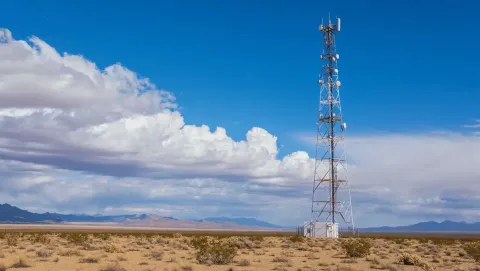
Today, wireless internet has become available to the point where customers expect high speed internet access from hospitality service providers. Microwave Wi-Fi internet plays a leading role in providing high speed internet access at all types of locations and in all types of businesses. Emerging technologies include an improved version of IEEE 802.11, WiMax IEEE 802.16, UWB IEEE 802.15.3a draft PAN, as well as 3G and 4G technologies. The improved IEEE 802.11 standards will be able to deliver speeds many times greater than the current technology.

WiMax IEEE 802.16 uses microwave radio broadcast to operate, but differs from Wi-Fi in a number of ways. It can network equipment and devices over wide areas, whereas Wi-Fi operates over a much more limited range. Unlike Wi-Fi, WiMax IEEE 802.16 does not require a line of sight path to connect equipment. It can provide service over areas spanning miles, and can cost less to use than 3G technology. “Ultra wideband” (UWB) is used for networking over short distances. It operates over a wide spectrum of frequencies to achieve speeds from around 500 Mbps and higher. 3G and 4G technologies use cell technology. Speeds are under the 1 Gbps high speed Wi-Fi speeds, and can vary.

Call or text us at

702.900.0000

Rob Cortez did a great job. walked through everything and was able to answer any questions I had.

Yelp

Great service and attention to detail. They came in and went through every step with us as a business. Assisted and did everything in their power to help with any concerns and assisted us in moving carriers as well as doing a follow up from start to finish. Everything was done very quickly and with care. The staff were friendly especially our salesperson! Mathew helped the most and was very attentive throughout the whole process and is a great experience in general

Yelp

Great customer service, the service it self has been great as well. Highly appreciated and recommended. Make sure you ask for Mark when you call, he'll get you all set up.

Yelp

Carl did an outstanding job installing our new satellite and getting our internet set up. He arrived on time, explained everything clearly, and made sure the entire system was working perfectly before he left. His professionalism, patience, and attention to detail really stood out. We're very grateful for the smooth experience--thank you, Carl!

Yelp