



Rob Cortez did a great job. walked through everything and was able to answer any questions I had.

Backup and disaster recovery · Las Vegas
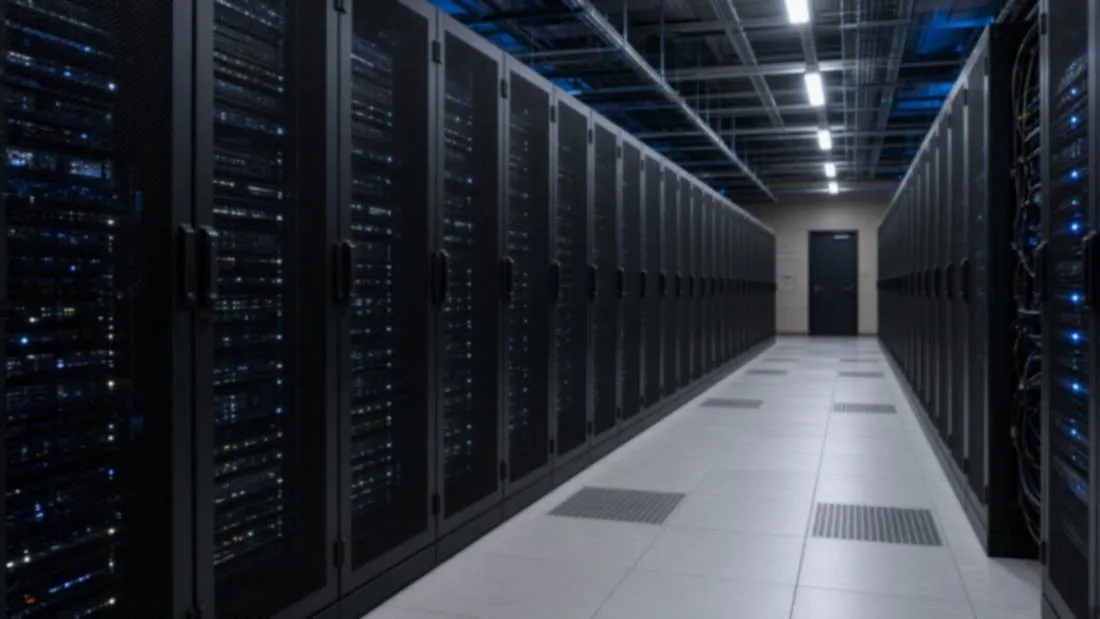
Backup and disaster recovery (BDR) is the copy of your data, plus a plan to bring the business back. Recovery Time Objective (RTO) is how long you can be down. Recovery Point Objective (RPO) is how much data you can afford to lose. Business continuity is staying open while that happens. Offsite copies sit in our two downtown Las Vegas datacenters. The path is ours — rooftop to our towers to our core — not the street poles and fiber laterals. When that corridor is dark for weeks, this path can still be up.
Call or text
702.900.0000Managed backup from the Las Vegas NOC
Offsite in two downtown datacenters
RTO and RPO set with you
On-net private replication
We own the path, not the street
24/7 local hands
Three different jobs. Most “backup” conversations are only the first one.
Backup:
A second copy of the data, so a deleted file or a dead disk is not the only copy.
Disaster recovery:
The plan and the place to put the business back. RTO is the clock. RPO is the data you can stand to lose.
Business continuity:
Staying open while recovery runs. Payroll, the register, and the phones do not wait for a perfect restore.
The copy and the road to the copy fail together when they share a street.
A backup you cannot reach is not a backup. A storm took down power poles on a major Las Vegas-area street, and they stayed down for weeks. Plant that lived on those poles, and the fiber under that corridor, stayed dark. Businesses on our fixed wireless and microwave path stayed up, because we do not ride that street infrastructure.
That is common-mode failure. Three versions of the same risk:
isp.net owns the last mile, the middle mile, and the rooms the copy sits in. We do not resell Cox or AT&T. The network is AS27501. Our access path is fixed wireless and microwave we own: a different medium, and a different route than the street. The radio and your LAN still need power at your building. A UPS or generator on your side is yours to provide. We do not claim the air path is immune to weather, and we do not claim we never have an outage.
A second internet circuit is not a second copy of your files. Why a backup internet circuit can fail is the circuit problem. This page is the data, and the path to the copy. Rooftop radios are installed under our Nevada C-2 electrical contractor license (#0093716). A private replication path can run up to 10 Gbps where line of sight and spectrum allow.
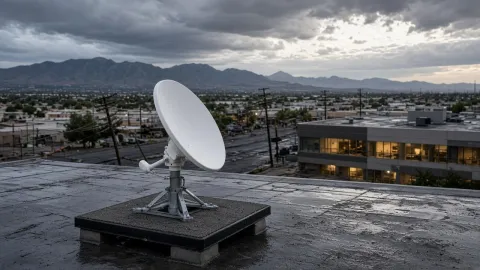
The radios are on the roof. The poles in the street are someone else's plant.
They decide how much you spend, and what you are willing to lose.
RTO is how long the business can be down. RPO is how much recent work you can afford to lose. A point-of-sale system that can lose a day of tickets is a different design than a file server that can lose an hour. The numbers below are illustrative. They are not a quote.
| What | Example RPO | Example RTO | Why it matters |
|---|---|---|---|
| Point of sale | Minutes | Under an hour | The register has to open. |
| Working files | A few hours | Same day | People can keep working. |
| Older email and archives | A day | Next day | History, not the front door. |
3-2-1 means three copies, on two kinds of media, with one copy offsite. People sometimes add a fourth idea, 3-2-1-1-0: one of those copies isolated from ransomware, and a restore you have actually tested. Ask how the offsite copy in our datacenter is isolated. We will not put a software brand on that control.
A full backup is the whole set. An incremental copy is what changed since the last run. A differential copy is what changed since the last full. An image is the machine, so you can stand the server back up. A file-level restore is one document. Most shops need both.
Replication is a live or scheduled private copy. Offsite means it is not in the same room as production. On-net means the copy travels our network instead of hairpinning the public internet. Off-net means it left our network.
Failover is moving work to the recovery side. Failback is moving it home after the original site is trustworthy again. A cold copy is data at rest. A warm site is hardware already racked so the restore has somewhere to land. A colo DR target is your own server in our hall.
Downtime is lost sales, payroll for people who cannot work, a possible ransom, and a reputation hit. BDR is the cost of the copy, the offsite target, and a path you can still use. We will not invent a dollar price for that on this page.
A managed copy, an offsite target in our datacenters, and a path we own.
isp.net runs managed backup and recovery from the Las Vegas network operations center. Copies are encrypted, sent, and stored in our facility. The NOC watches the jobs. You do not staff a tape rotation, and you do not buy the backup software license yourself. We do not name a backup-software vendor here.
This is not a backup app you subscribe to and then hope some other carrier can reach. The copy and the road to it are the same company.
Because the failure that takes the street does not have to take the restore.
No shared street lateral:
Primary and “backup” in the same trench fail together. Our last mile does not use that lateral.
Microwave does not wait on the pole crew:
Rebuilding a pole line takes weeks. A rooftop path does not sit in that schedule.
Cell is not diverse by default:
If the tower’s backhaul is the fiber that just got cut, the phone hotspot dies with the street.
Two datacenters:
Offsite copies live in downtown halls we operate, building to building, SOC Type II audited.
On-net to the copy:
From your LAN to the offsite target on our network, instead of out to the public internet and back. Learn more about Private point-to-point.
Anyone whose current plan is a USB drive or the same cable plant.
Offices and firms:
The books, the files, and the line-of-business app have to come back in a known order.
Clinics:
The schedule and the records have to come back on a clock you set.
Multi-site businesses:
Each site needs a copy that does not depend on that site’s street plant. Learn more about PremiumNet.
USB drives and the same cable:
A disk in a drawer, or a second circuit on the same poles, is not an offsite plan.
It should not. This page is Las Vegas data backup and disaster recovery for businesses. Guest-room internet is a different service.
RTO is how long you can be down. RPO is how much recent data you can afford to lose. We set both with you before we size the copy.
Three copies of the data, on two kinds of media, with one copy offsite. A tested restore is what proves the offsite copy works.
Both jobs. The NOC runs the backup and recovery. The path to that copy is an isp.net network, not a circuit we resell on the street plant.
In our downtown Las Vegas datacenters, SOC Type II audited. That can be a 1U backup server or a larger rack.
Yes. A private point-to-point can carry the copy from your site to the datacenter and stay on our network.
Circuits on those poles and on the fiber under that corridor stay dark. Customers on our fixed wireless and microwave path stayed up in that situation, because we do not use that street plant. Your building still needs its own power.
Often no. Many cell towers are fed by the same fiber laterals as the street. Cut that fiber and the cellular failover dies too.
The offsite copy is in datacenters we operate in Las Vegas, on a network we operate. It is not a consumer cloud drive, and it is not a backup product we resell under another company’s name.
Yes. A backup server can live in our colo, from 1U up, with a private path from your office if you want replication to stay on-net.
Use the form, or call or text 702.900.0000. Email sales@isp.net.
Rob Cortez did a great job. walked through everything and was able to answer any questions I had.
Great service and attention to detail. They came in and went through every step with us as a business. Assisted and did everything in their power to help with any concerns and assisted us in moving carriers as well as doing a follow up from start to finish. Everything was done very quickly and with care. The staff were friendly especially our salesperson! Mathew helped the most and was very attentive throughout the whole process and is a great experience in general
Great customer service, the service it self has been great as well. Highly appreciated and recommended. Make sure you ask for Mark when you call, he'll get you all set up.
Carl did an outstanding job installing our new satellite and getting our internet set up. He arrived on time, explained everything clearly, and made sure the entire system was working perfectly before he left. His professionalism, patience, and attention to detail really stood out. We're very grateful for the smooth experience--thank you, Carl!
I've had ISP.net for 10 years. I'm a residential customer and when I say I've never had an outage or slow uploads/downloads speeds belive me. I kinda chuckle at all the comments out their who have the bigger know names for service when they complain about service, price and reliability I wish I could tell them get ISP.net. pricing is very competitive for the what's out there. If I do need to call about change of email or phone number I speak to someone right away and I love that its a local business. Give them a call and try it out.
Service was done in a timely and professional manner. He explained the job intentions and made sure wifi was up and working.
Carl and Joe Excellent customer service, highly skilled, very knowledgeable service guys. Carl set expectations explained the procedures midway provided an update and at the end of the install provided a summary of what to expect.If there ever was a concern. Joe joe explained the equipment lights.How to get in touch with tech support?How to do a hard reboot?How long does it take to reboot. Absolutely excellent customer service.These guys are the best.Thank you for all you did at this house
Rob came out set us up our business internet, clean, fast professional job, highly recommended. Internet quality and speed is excellent.