



Rob Cortez did a great job. walked through everything and was able to answer any questions I had.

Private networks · Las Vegas
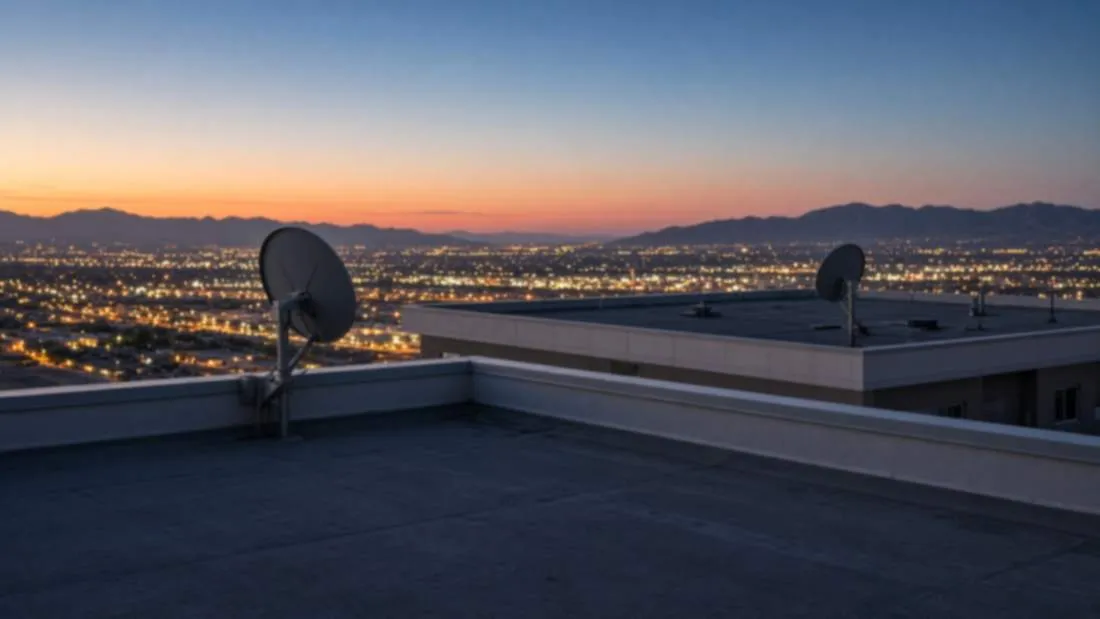
isp.net designs, owns, and operates private point-to-point links in Las Vegas. Microwave PTP when fiber is slow, expensive, or the wrong path — no street cut, a crow-flies shot, fewer hops, low latency. Fiber when the span needs it. Up to 10 Gbps where line of sight and spectrum allow, handed off at your switch or in our downtown colo, off the public internet.
Call or text
702.900.0000Private path, not a VPN
Microwave PTP and fiber
Up to 10 Gbps class
Crow-flies, low latency
No trench for metro wireless
Owned network AS27501
Can end in our colo
24/7 Las Vegas NOC
A point-to-point private network is a dedicated link between two locations. Traffic stays on the engineered path. It does not have to traverse the public internet. In the Las Vegas valley, the microwave version is the Wireless Metro Link: a private microwave PTP between two valley locations.
Office to office:
Two offices on one private circuit for voice, file replication, POS, or cameras between sites.
Building to building:
A campus, or buildings across a street or a parking lot, joined by a wireless bridge.
Site to colo:
Your building to a rack in one of our two downtown Las Vegas datacenters, on the same network. Learn more about Las Vegas colocation.
No. A site-to-site VPN encrypts traffic and then sends it across the public internet. A private point-to-point link is the circuit itself.
Microwave on this network is encrypted over the air. A Layer-2 extension, sometimes called a transparent LAN service, can make both sites look like the same private network. The handoff at each demarc is fiber or copper into your switch.
SD-WAN that still rides broadband is still the internet. MPLS, carrier metro Ethernet, dark fiber, and a wavelength are other private-line shapes. We build the span as microwave, fiber, or both. A path that leaves the valley usually needs a provisioned fiber or leased segment. We do not sell a microwave shot across the country.
Microwave does not always beat fiber. When the air path is clean, this is typically the lowest-cost private circuit, and the highest reliability we can build, because every piece is an isp.net asset. No contractor is hired to create the link.
Days, not months:
A surveyed microwave shot can go live in days. A new fiber lateral or an ILEC provision is often measured in months.
No street cut:
No trench, no permit circus, and no wait on the utility locate.
Crow-flies path:
The radio path is the straight line. Fiber follows roads and manholes, so the glass is usually longer than the air.
Fewer active hops:
Fewer devices in the path means lower latency and jitter when milliseconds matter.
No backhoe fade:
A fiber cut in a shared duct does not take the microwave shot.
Primary or backup:
Microwave can be the private path, or the off-net backup beside fiber you already have.
Typically the lowest cost:
When you only need two sites, this is usually the cheapest private circuit. There is no carrier construction bill and no contractor in the middle. A dark-fiber or metro-Ethernet build is the expensive way to join the same two roofs.
All isp.net assets:
The radios, the towers and POPs, the install, and the NOC are isp.net. No contractor is brought in to create the link. We are not reselling Cox or AT&T last mile. Owning every piece is what makes the path the most reliable.
Start at the rate you need:
Size the link for today and resize when the path supports it, up to 10 Gbps class. Not every hop is 10 Gbps.
Already running in this desert:
We operate microwave across Southern Nevada. This is a local network, not a drawing of one.
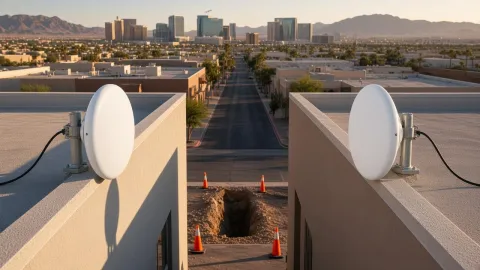
The radios face each other. The trench in the street is the fiber schedule.
This is typically the lowest cost, and it is built for the highest reliability, because the link uses isp.net assets end to end. Our radios, our towers, our crew, our NOC. No outside contractor creates the shot. Licensed carrier-grade radios are what we use on major backbone points. A shorter last-mile shot is a compact panel radio. Longer paths get a larger dish. The longer fiber-versus-microwave note is here. Fixed wireless internet, including last-mile service, is on the microwave internet page.
It needs line of sight and a clear Fresnel zone. Trees, a new building, or terrain in that zone can weaken a link even when you can see the other roof.
Weather: rain fade exists on some bands. Licensed backbone links are engineered with fade margin, and we design around weather. We do not treat weather as magic.
A very long span, or no line of sight, becomes a relay off our towers or a fiber span for that piece. Fiber still wins some long-haul routes and some dense metro laterals. We sell both.
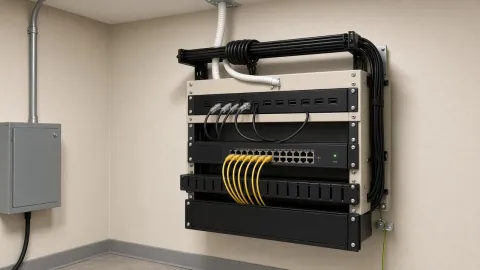
The network core is designed toward a 99.999% availability goal. That figure is backbone engineering, not a quoted customer SLA. PremiumNet contracts, when you also want dedicated internet, are written separately.
We own the datacenters, the middle mile, the last mile, the wireless, and the equipment, on AS27501.
| Microwave PTP | Fiber private path | VPN over the internet | |
|---|---|---|---|
| Time to install | Days after a clear path survey | Fast if the building is already lit. A new lateral is often months. | Hours, on whatever internet you already have |
| Construction | Rooftop radios. No street cut. | Trench, permits, manholes, or a carrier build | None |
| Private or public | Private engineered path | Private, if it is your fiber, wavelength, or a provisioned circuit | Public internet, with encryption on top |
| Latency | Few hops. Crow-flies distance. | Low, along the cable route, which is usually longer | Whatever the internet is doing that hour |
| Backhoe risk | A street cut does not break the air path | A cut in a shared duct can | The internet has its own outages |
| Best use | Metro Las Vegas when line of sight is clean, or as backup beside fiber | Long-haul, and dense laterals that are already lit | Remote access. Not a substitute for a private circuit. |
A private P2P is the path between two places. It is not your internet connection. You can have both.
IT managers, multi-site owners, and anyone who was quoted six months for a fiber lateral.
Multi-site Las Vegas businesses:
Two or more valley locations that should share a private network.
Campuses:
Buildings across a street, a lot, or a campus that should look like one LAN.
Warehouse and headquarters:
Replication, voice, cameras, and POS between the floor and the office.
Colo customers:
A private handoff from the office to your own rack.
Fiber backup:
An air path beside Cox or AT&T fiber, so one duct cut is not an outage.
Temporary, then permanent:
A construction span that stays when the building does.
A point-to-point private network is a dedicated link between two locations, and the traffic stays on that engineered path. It can be microwave, fiber, or both. It does not have to cross the public internet.
No. A site-to-site VPN encrypts traffic and then sends it across the public internet. A private P2P is the path. Microwave shots are encrypted over the air, and a Layer-2 extension can make both sites look like the same private network.
On many Las Vegas metro paths, microwave is live in days, needs no street cut, and takes the crow-flies route with fewer active hops. Fiber still wins some long-haul spans and some dense laterals. We sell both. Read the fiber versus microwave page.
Yes, for a direct microwave shot. Both ends need a clear view, or we relay the path off an isp.net tower. If there is no air path, that span is fiber.
The Fresnel zone is the football-shaped volume of air around the straight line between the two radios. Trees, a new building, or terrain in that zone can weaken the link even when you can see the other roof.
Up to 10 Gbps where line of sight and spectrum allow. We do not promise 10 Gbps on every hop. Most links start at the rate you need and can be resized when the path supports it. Capacity is symmetric when the link is engineered that way.
Yes. A P2P can terminate in one of our two downtown Las Vegas datacenters, so the office-to-rack path does not have to ride the public internet. See Las Vegas colocation.
Rain fade exists on some bands. Licensed backbone links are engineered with fade margin, and we design around weather. A survey tells us whether the path is sound. We do not treat weather as magic.
Major backbone points use licensed carrier-grade radios. The survey picks the radio the path needs. We do not publish band names here.
Yes. Microwave can be the primary private path or the off-net backup beside Cox or AT&T fiber, so a cut in their duct does not take both.
Point-to-point is one radio aimed at one other radio. Point-to-multipoint is one hub serving many sites, and that is a different product: point-to-multipoint. Several private PTPs can also be built as a hub-and-spoke or a small mesh.
No. Those are legacy names. A T-1 was a 1.544 Mbps circuit, and IntraLATA and InterLATA were old tariff regions, including talk of spanning the 48 contiguous states. We sell modern PTP: microwave in the valley, and a provisioned fiber or leased segment when the path leaves the valley.
Use the form, or call or text 702.900.0000.
Rob Cortez did a great job. walked through everything and was able to answer any questions I had.
Great service and attention to detail. They came in and went through every step with us as a business. Assisted and did everything in their power to help with any concerns and assisted us in moving carriers as well as doing a follow up from start to finish. Everything was done very quickly and with care. The staff were friendly especially our salesperson! Mathew helped the most and was very attentive throughout the whole process and is a great experience in general
Great customer service, the service it self has been great as well. Highly appreciated and recommended. Make sure you ask for Mark when you call, he'll get you all set up.
Carl did an outstanding job installing our new satellite and getting our internet set up. He arrived on time, explained everything clearly, and made sure the entire system was working perfectly before he left. His professionalism, patience, and attention to detail really stood out. We're very grateful for the smooth experience--thank you, Carl!
I've had ISP.net for 10 years. I'm a residential customer and when I say I've never had an outage or slow uploads/downloads speeds belive me. I kinda chuckle at all the comments out their who have the bigger know names for service when they complain about service, price and reliability I wish I could tell them get ISP.net. pricing is very competitive for the what's out there. If I do need to call about change of email or phone number I speak to someone right away and I love that its a local business. Give them a call and try it out.
Service was done in a timely and professional manner. He explained the job intentions and made sure wifi was up and working.
Carl and Joe Excellent customer service, highly skilled, very knowledgeable service guys. Carl set expectations explained the procedures midway provided an update and at the end of the install provided a summary of what to expect.If there ever was a concern. Joe joe explained the equipment lights.How to get in touch with tech support?How to do a hard reboot?How long does it take to reboot. Absolutely excellent customer service.These guys are the best.Thank you for all you did at this house
Rob came out set us up our business internet, clean, fast professional job, highly recommended. Internet quality and speed is excellent.